

In today’s interconnected global economy, generative Artificial Intelligence (AI) has transcended its technological conceptualization stage to consolidate itself as an indispensable pillar within the strategic planning of high-performing corporations.
Organizations leading their respective industries do not perceive these technologies as simple siloed automation tools, but as a core business asset capable of redefining business models, optimizing cost structures, and dramatically accelerating executive decision-making cycles through predictive and predictive data analytics at scale.
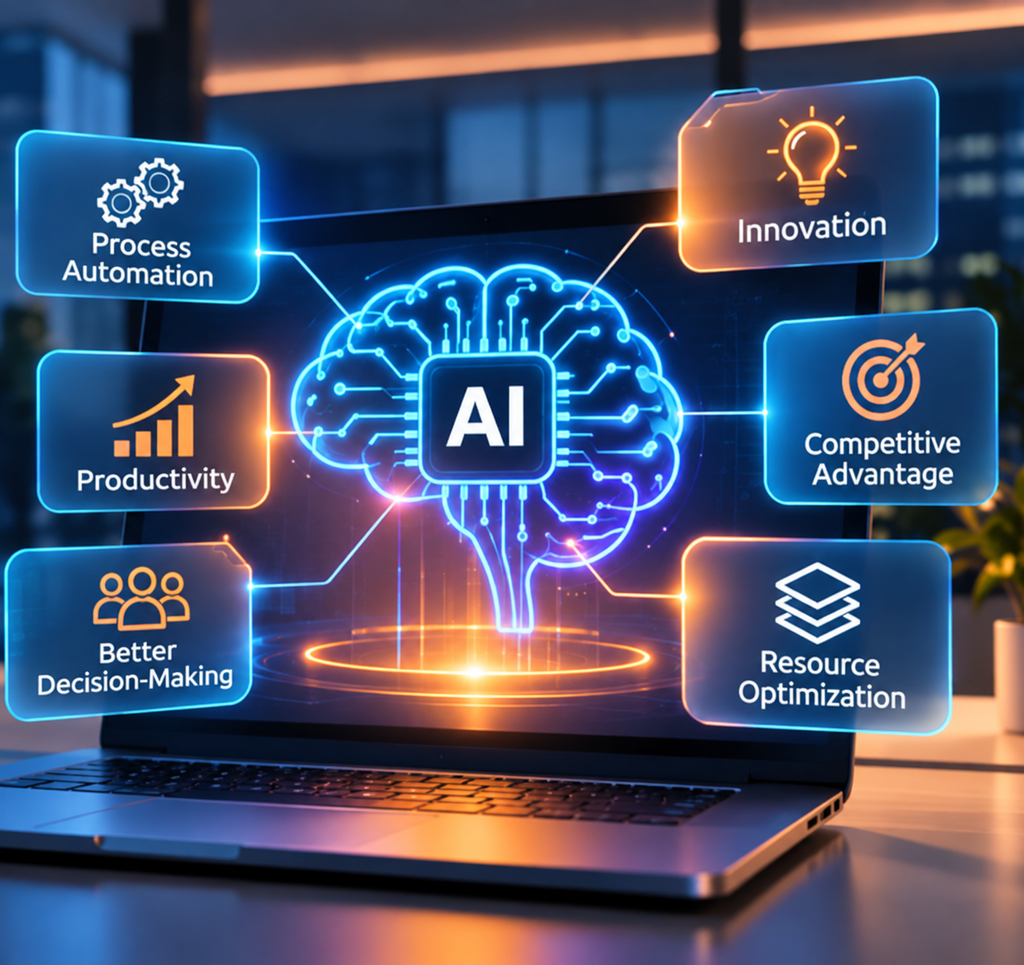
The Impact of Generative AI on Corporate Operations
Unlike technical approaches that are purely academic, truly integrating generative AI into the organizational fabric results in key performance indicators (KPIs) that are fully measurable and auditable. Implementing advanced language models and deep learning systems allows organizations to optimize the allocation of their critical resources. By reducing the burden of redundant operational and transactional processes, companies can free up high-value human capital, redirecting talent toward corporate planning, disruptive innovation, and building long-term business partnerships.
Global corporate consulting studies show that the systemic adoption of generative AI architectures generates a substantial optimization of operational time, achieving contractions of up to 40% in the hours spent on routine document analysis, regulatory report writing and contract data processing. It also provides boards with unprecedented
commercial agility, allowing them to adapt immediately to macroeconomic fluctuations and dynamic changes in global consumer demand.
Success Stories and Return on Investment (ROI)
To understand the scale of this transformation in the real corporate world, it’s crucial to look at the technology infrastructure setups carried out by leading institutions in the multinational financial services sector. A highly relevant case study involves a global investment banking firm that integrated generative AI solutions specifically to manage and assess its corporate risk reports and international regulatory compliance.
Before this technological implementation, corporate analyst teams required an average of five business days to consolidate, process, and clean financial information coming from multiple regulated markets. After adopting a specialized model trained with historical corporate data, the time needed to generate executive risk reports was reduced to just a few hours, maintaining or even exceeding the required technical accuracy standards. This reduction in turnaround times not only resulted in direct operational savings in staffing and external consulting costs but also gave senior management the tactical ability to anticipate market contingencies, proactively restructure investment portfolios, and protect the organization’s assets in highly volatile scenarios.
Considerations for a Successful Strategic Implementation
The corporate adoption of generative AI isn’t free from critical challenges that the executive team needs to address with a methodical approach. Data governance stands out as the key factor for the long-term success of these projects. It’s super important to set clear policies on confidentiality, cybersecurity, and intellectual property to avoid accidentally leaking sensitive company information to publicly accessible models.
Additionally, the return on investment of these technological tools is maximized only when it is directly linked to a robust training and cultural change management program. Business leaders need to make sure that key employees adopt these tools as allies in their daily work flows, fostering an organizational culture focused on digital efficiency and constant innovation.
CONCLUSION
In conclusion, generative Artificial Intelligence has stopped being an exclusive privilege of Silicon Valley tech companies and has become a survival and leadership imperative for any organization with global aspirations. It’s not just an expense on IT infrastructure, but a high-value strategic investment with the intrinsic ability to determine which corporations will set the market rules and which will fall behind in the wave of accelerated digital transformation.
REFERENCES
Brynjolfsson, E., Li, D., & Raymond, L. R. (2023). Generative AI at work (National Bureau of Economic Research Working Paper No. 31161). NBER. https://www.nber.org/ papers/w31161
Chui, M., Hazan, O., Roberts, R., Singla, A., & Sukharevsky, A. (2023). The state of AI in 2023: Generative AI’s breakout year. McKinsey & Company.
Davenport, T. H., & Mittal, N. (2022). All in on AI: How smart companies win big with artificial intelligence. Harvard Business Review Press