

The new artificial intelligence models are transforming weather forecasts through the analysis of satellite data and increasingly detailed predictions.
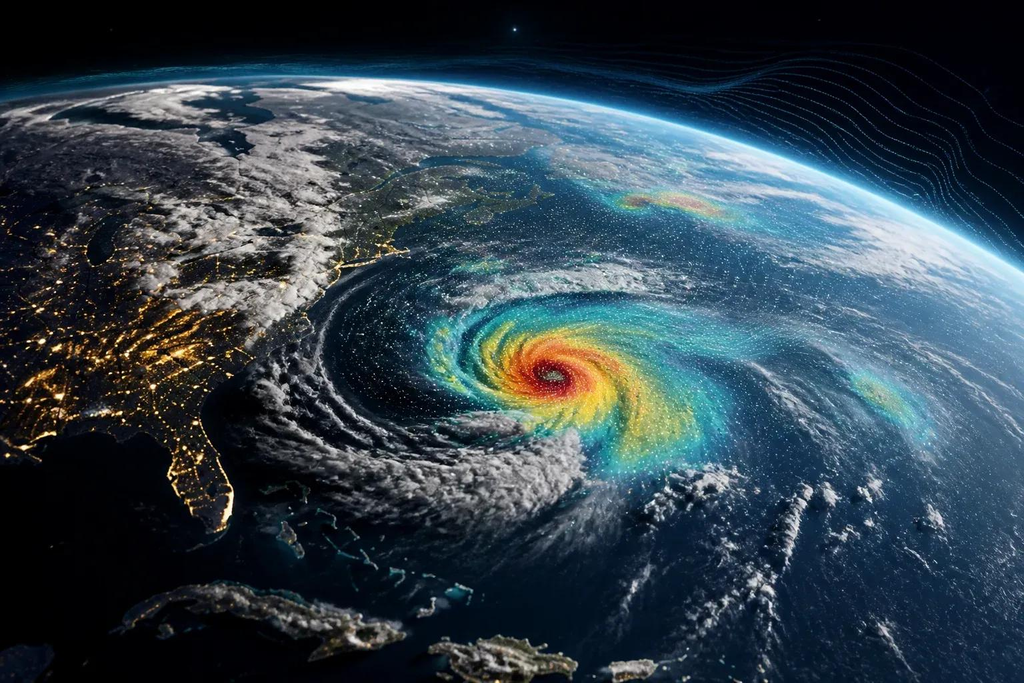
For many years, weather forecasts have relied on complex mathematical models that use atmospheric information to calculate possible weather conditions.
However, advances in artificial intelligence are changing the way these predictions are made.
Today, AI models can analyze large amounts of weather information, identify atmospheric patterns, and generate forecasts in considerably less time than some traditional methods.
This evolution represents an important opportunity to anticipate storms, heavy rain, extreme temperatures, and other phenomena that can affect millions of people.
How does weather AI work?
Weather AI models use different sources of information, including:
- Satellite images.
- Historical weather records.
- Temperature and humidity measurements.
- Wind speed and direction.
- Information on atmospheric pressure.
Through machine learning, these systems identify relationships between variables and generate predictions about possible future conditions.
Unlike traditional weather models, some AI systems can produce forecasts with lower computational resource demands.
WeatherNext 3: an important breakthrough in 2026
In September 2026, Google DeepMind and Google Research introduced WeatherNext 3, a new generation of weather models that incorporates real-time satellite information.
Some of its features include:
- Hourly forecast updates.
- Resolution of up to 5 kilometers for certain weather variables.
- Improvements in rainfall prediction.
- Analysis of variables related to solar and wind energy.
- Integration of atmospheric information and ground observations.
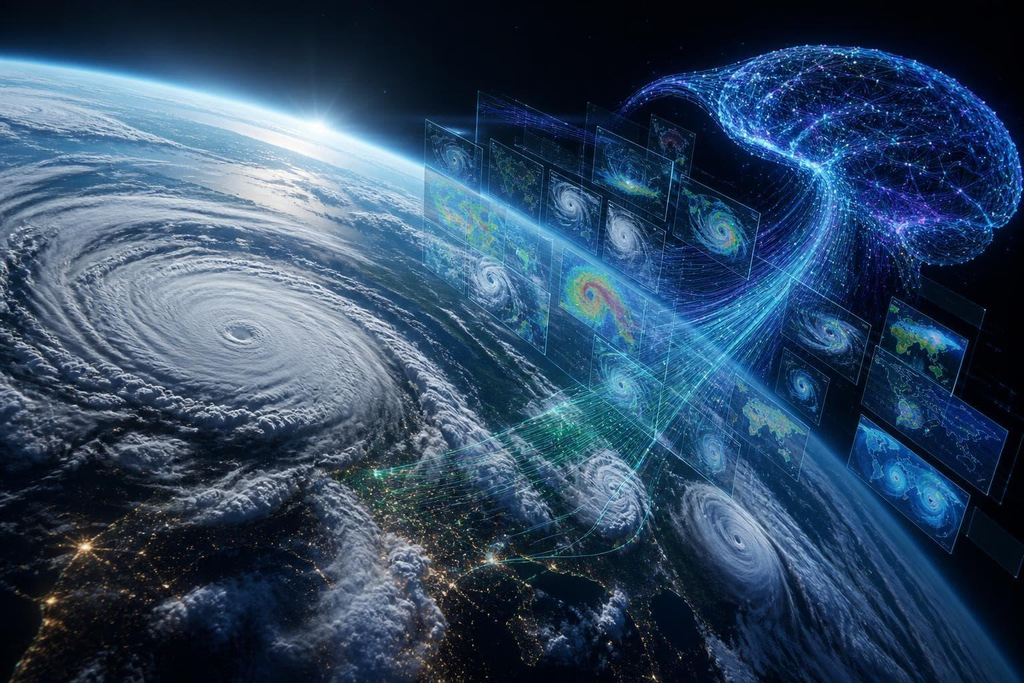
Technology aims to offer more detailed forecasts tailored to the planet’s real conditions.
What applications can it have?
- Agriculture: allows you to anticipate rain and temperatures to better plan crops.
- Civil protection: can help identify dangerous weather conditions and prepare responses for emergencies.
- Renewable energy: helps estimate solar and wind energy production.
- Transportation: provides information that can be used to plan air, sea, and land operations.
Can artificial intelligence predict any weather phenomenon?
No. The atmosphere is a complex system, and there are limits to how accurate forecasts can be, especially when trying to predict local phenomena or rapidly changing conditions.
That’s why AI should be complemented with weather observations, physical models, and oversight from specialists..
References
- Google Research. (2026, September 3). Introducing WeatherNext 3, our most advanced and accurate global weather AI model.
- Guan, H., et al. (2026). Advancing subseasonal forecasting with machine learning. Nature, 658, 951–957
- Hong Kong University of Science and Technology. (2026, January 28). HKUST’s AI breakthrough transforms storm forecasting.