

Cybercriminals can compromise programs, libraries, and providers to reach thousands of users without directly attacking their devices.
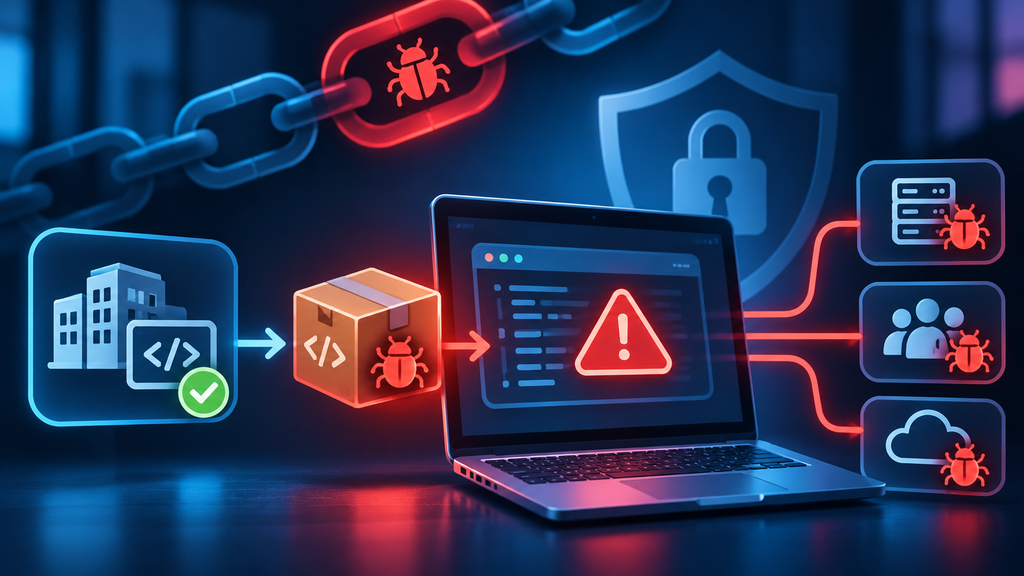
When a company installs a program, it usually trusts that it was developed and distributed safely. But what happens if the software that looks legitimate was already tampered with before reaching the user?
This scenario is known as a software supply chain attack. It’s a particularly tricky threat because it takes advantage of the trust that exists between developers, suppliers, and organizations.
How does it work?
Modern software is usually built using third-party components, open-source libraries, development tools, and external services.
Attackers can try to compromise any of those elements to introduce malicious code into a product that will later be distributed in a seemingly legitimate way.
Some of the techniques used include:
- Compromise developer accounts.
- Manipulate software updates.
- Introduce malicious code into dependencies.
- Alter tools used during compilation.
- Access a provider’s systems to reach their clients.
A case that shows the risk
One of the most well-known cases was the attack on the XZ Utils library, a tool used in many Linux systems. In 2024, a backdoor was discovered that had been introduced through a campaign of manipulation and trust within the project.
The case showed that even open-source projects can become targets when attackers aim to compromise components used by other systems.
Verizon reports also document incidents related to vulnerabilities and risks coming from third parties.
What consequences could it have?
An attack of this kind can cause:
- Unauthorized access to business systems.
- Theft of credentials and information.
- Malware distribution through updates.
- Compromise of multiple organizations.
- Disruption of tech services.
- Loss of trust in providers.
How to reduce the risk?
Organizations can implement measures such as:
- Check the origin of software components.
- Review the dependencies used in projects.
- Apply security controls in development processes.
- Protect developers’ accounts with multi-factor authentication.
- Review updates before deploying them in critical environments.
- Keep an inventory of suppliers and tech components.
It’s also useful to use a list of software materials, known as a SBOM (Software Bill of Materials), which lets you identify the components included in an application.
Supply chain attacks show that an organization’s security doesn’t just depend on its own systems. It’s also related to the tools, libraries, and providers it uses. That’s why checking the origin of software and managing its dependencies is key to reducing risks.
References
- Verizon. (2025). 2025 Data Breach Investigations Report.
- Verizon. (2026). 2026 Data Breach Investigations Report.